Tuesday, June 20, 2006

You Gotta Do What You Gotta Do

Comrex did not design the ACCESS to replace existing STL technology. While it was thought that the ACCESS would be exceedingly popular for STL back-up, we really never intended it to be used on the public internet as a primary Studio to Transmitter Link. Especially wirelessly.

So imagine our concern... No... Our DISMAY when we learned that of the first run of ACCESS, several pair had been purchased for exactly that usage. When we spoke with the customers and said that we really didn't think the public internet was the appropriate transmission path for an STL!!! THE LIFE BLOOD OF A RADIO STATION!!!!! We were told by one customer, "OK. The choice my station has is to use the ACCESS on DSL or to go dark. Do you think my station should go dark?"

So what choice did we have. We went back into the "ivory tower of coding miracles" and developed version 1.1, an even more robust version of code. We STILL do not encourage use of the public internet for STL. But in the interest of understanding that you gotta do what you gotta do, we will tell the story of one station who was out of options.
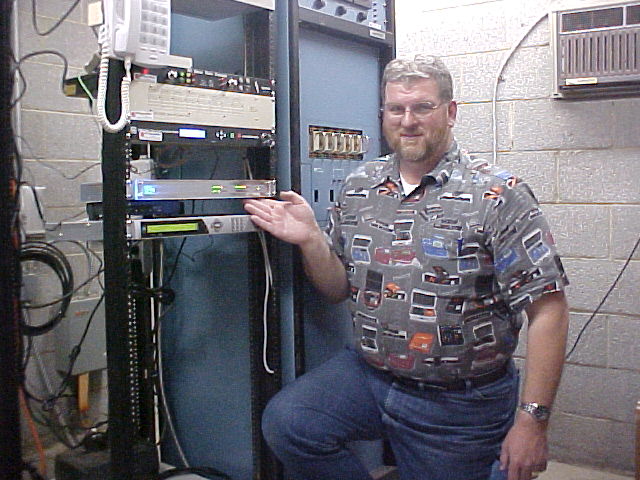
Stevan White is a contract engineer based in Amarillo, TX and KDJW 1360 AM (also in Amarillo) is one of his clients. He was given the task of getting KDJW's STL reliably functioning on the ACCESS over wireless internet. Stevan was not displeased with the initial performance with code revision 1.0, but talking with him sparked some ideas in the ACCESS engineering team and so Stevan was the first beta tester of version 1.1.

This is what Stevan had to say about this.

"As good as the ACCESS worked right out of the box we were having some issues with our ISP that made our "STL" a little less than desirable with occasional dropouts, hiccups and Darth Vader, Jr. sounding coding delay.

(They later found and fixed a router problem which made a huge difference in the quality of our connection.) As soon as it was available, (Comrex) sent us the software upgrade via email. We waited a while to do it so we could be sure to have things set up and in place to make the process as smooth as possible. Since we use the Access to send our network audio feed to the studio (satellite dish and receiver are at the transmitter site due to lack of space at the downtown studio) I got set up and ready to go but waited until after the local ID and patched the satellite audio feed directly to the audio processor. The only interruptions we would have during the whole process would be the few seconds to move the XLR connector before and after the process.

My A+ certified computer whiz son John, who works with me on a lot of studio and transmitter projects, had the software ready to go on the computer at our home office. After we were "in the clear" he disconnected both Access codecs and began the update process. We reset everything to factory default as the instructions suggested.

After reconnecting and rechecking all of our settings, I put the Access back on the air. The whole process, including our double checking and rechecking of everything we could think of, took 55 minutes total. Except for a few seconds of silence while making the switch, we couldn't hear any difference in the quality of the audio! The audio still sounded just as good making the trip to the studio and back as it did direct.

This same client is talking about a low power FM project in a small community almost 200 miles away. They want to broadcast the same program material from that location. (I started thinking about using the Access for point to multipoint distribution.) They also wanted to know if they could do all this without a studio there. My reply?
No problem."


If you are an ACCESS user and your codec does not have version 1.1, it may be worth upgrading as it could enhance performance. Or you could wait and upgrade to version 2.0 in mid July. As with most Comrex upgrades, there is no cost to upgrade, so it is worth checking the upgrade page on the Comrex website regularly.

Tuesday, June 13, 2006

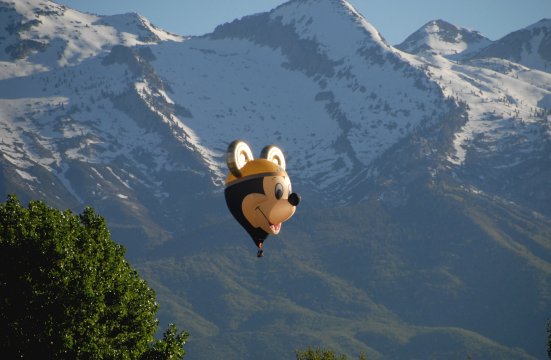
"Happiest Balloon on Earth Tour" with Disney

Ok. This one isn't an ACCESS remote. They used a Matrix on GSM. But I was so charmed by the resourcefulness of Mike Ames, who engineered the remotes.

Consider the challenge. Mike was charged with delivering two weeks of remotes from 11 different cities. From a HOT AIR BALLOON!!!! Yup. You heard me right. He needed to use the Matrix on GSM while the talent was floating around in a balloon. One of the biggest difficulties was getting the talent to be completely self-sufficient. The talent needed to be able to bound into the balloon with all necessary equipment during the brief moment that the balloon was on the ground.

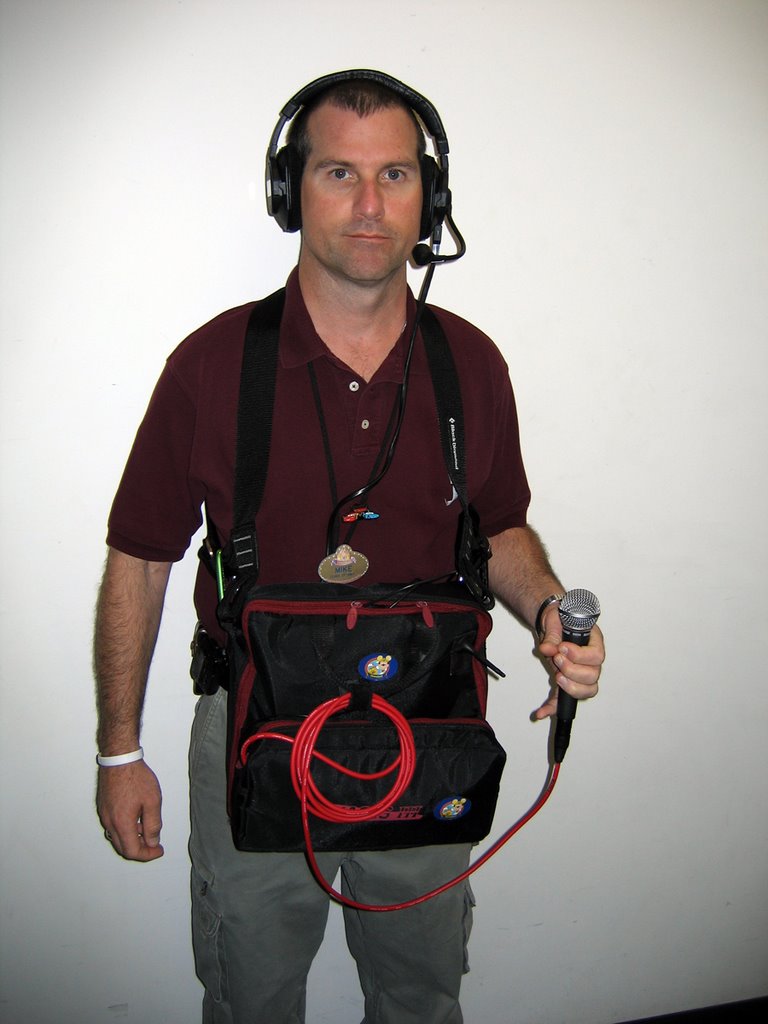
Creative engineering was necessary. Mike designed a way to modify a gear bag in order to be able to make a Matrix wearable including battery, GSM module, and antenna (as well as mics, etc). He did a heck of a job. Don't you think?

From Mike:

"You can tell my story. It was the "Happiest Balloon on Earth Tour" with Disney (celebrating the 50th anniversary of the park). The cities we went to were Tucson, AZ - Phoenix, AZ - San Diego, CA - Fresno, CA - San Francisco, CA - Sacramento, CA - Vancouver, BC - Seattle, WA - Portland, OR - Salt Lake City, UT - & Albuquerque, NM. We did mostly am remotes, starting at 05:00 am, except for Vancouver, BC which was a pm flight. Three or four of the cities we had 2 stations broadcasting at the same time, with only one station at a time actually flying in the balloon. When a station did fly in the balloon, they were generally in the air for around 45 minutes. Whether they flew in the balloon or were just tethered, the broadcasts were around 3 hours, from set up to strike of the balloon.

We were lucky enough to have the best pilots in the business, in Scott and Laurie Spencer who have flown for some 30 plus years, we also picked up crew members for the balloon set up and strike in each city. Besides engineering the remotes in the morning, I had to actually assist with the crewing in the pm, which made for a very long day. But it was truly a great experience, and I learned a lot about being in the middle of no where trying to do a Live Broadcast, what a great challenge."

Mike used T-Mobile and was successful in all locations with no exceptions. This is surprising and delightful to us at Comrex, as we have been hearing more and more horror stories about GSM carriers dropping support for CSD. We are theorizing that perhaps being Disney doesn't hurt?

Tuesday, May 30, 2006

Radio Free Asia - Live from the Himalayas

Ok. This isn't really a remote broadcast. It's a regular broadcast from a remote area.

"We recently took an ACCESS unit Comrex loaned us to Bangkok Thailand for testing. The link with our headquarters in Washington DC worked great. The Access provided ISDN quality without the dialup cost. The same demo unit was then carried to Dharamsala, India where it was not only tested but worked so well we used the ACCESS link for a series of live shows. The ACCESS sound quality was better then any other Telco or Internet solutions we have tried to date. The results were especially reliable considering that Dharamsala has one of most “problematic” Internet infrastructures that we have come across. Dharamsala is a mountainous fifteen hour drive from Delhi straight up the Himalayans’ and is hard to get equipment into. The Access worked so well there we bought the demo unit and kept it there."

David Baden, Chief Technology Officer Radio Free Asia


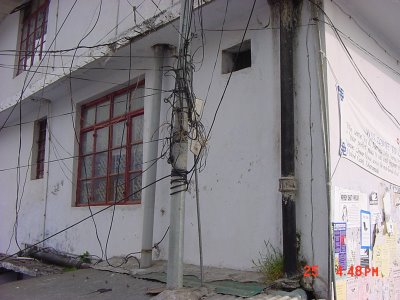
The “problematic” Internet infrastructure to which he was referring....


Wow. Just wow.

He later apologized for the lousy picture. I looked at him stunned. How could he say this was a lousy picture?

He explained that they never had a camera available when the monkeys were there. Apparently there are monkeys that hang out in these wires, which must constantly be chased away as they enjoy chewing on the wires.

Even Verizon territory doesn't have THOSE issues!

Live from 37,000 Feet - No kidding - Live Broadcast from a Lufthansa flight!

Ok. This one was cool.


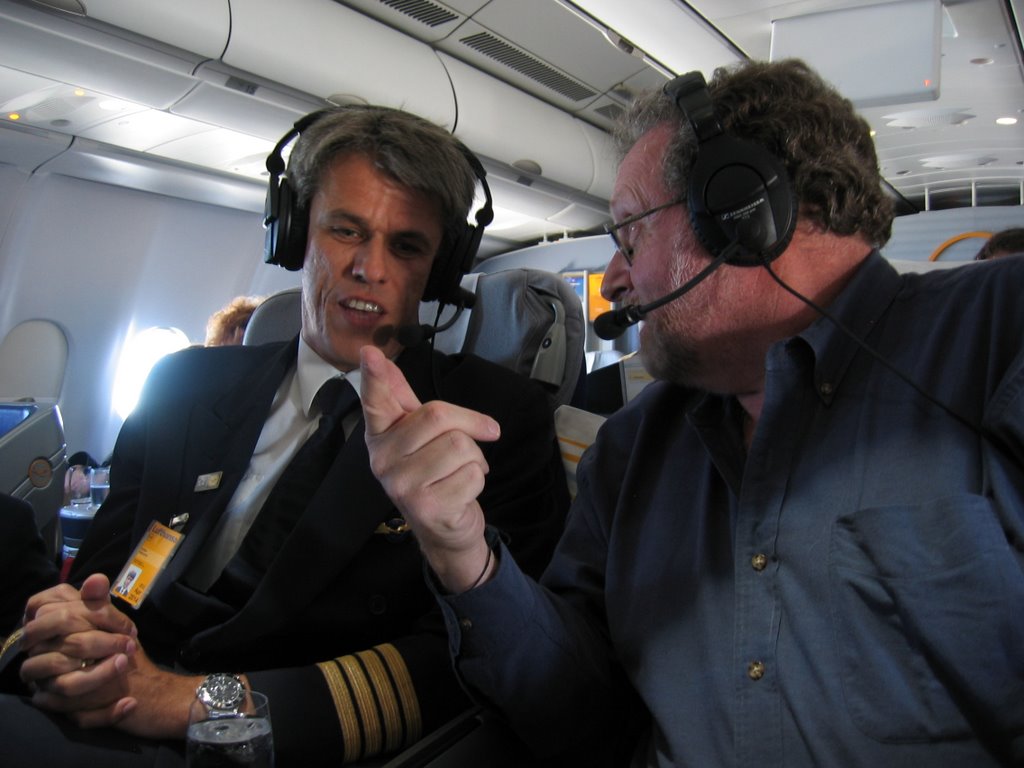
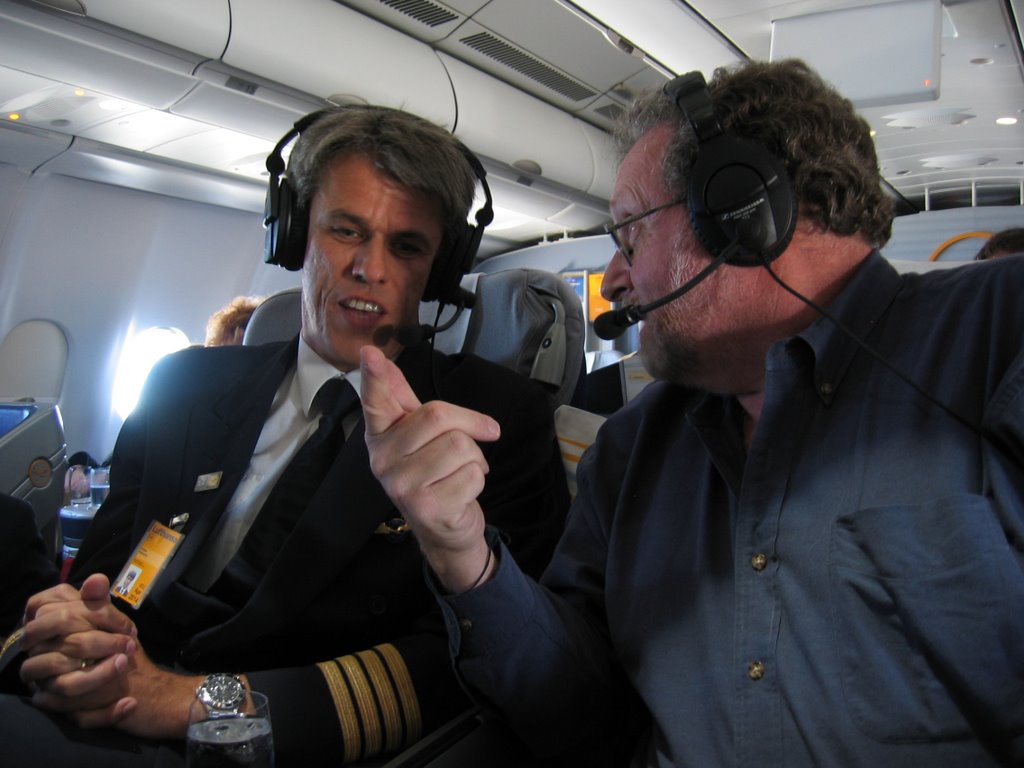
April 22, 2006 - Peter Greenberg, host of the weekly, nationally syndicated radio program Travel Today , successfully aired his three hour talk show from a commercial airplane at 37,000 feet on a regularly scheduled flight between Frankfurt, Germany and New York, US.

This is the first broadcast of it's kind. Engineers Mike Worrall of Travel Today and Lars Hanson from Boeing Connexions demonstrated extreme determination and a bit of courage to make this broadcast a success using Connexions by Boeing, a Comrex ACCESS and the public Internet.


Peter Greenberg -NBC TV's Today Show travel editor and host of the weekly, nationally syndicated radio program Travel Today - regularly delivers live broadcasts from difficult locations, so it should be no surprise that he was determined to be the first to do the impossible. It had been seen as "the holy grail" of remote broadcasting to deliver a show from an airplane at altitude during an intercontinental flight. But Peter not only sought the holy grail, but the largest challenge of all, a LIVE TALK SHOW including taking callers from the air.


Travel Today engineer, Mike Worrall, first contacted Comrex with the concept in September, 2005 to discuss the possibilities of whether the new Comrex ACCESS could rise to the challenge. Comrex engineers embraced this project and after reviewing technical specs for the new 'Connexion by Boeing' internet service, determined that, while very difficult, this concept was theoretically possible. The team of engineers, including Travel Today's Mike Worrall, Boeing Connexions engineers led by Lars Hanson, and the ACCESS development team led by Tom Hartnett of Comrex, worked for months in the lab to tweak settings and simulate real world conditions. It was determined that this broadcast would be attempted.

Ever conservative, Comrex cautioned that the transmission delay was likely to be staggeringly long and suggested that perhaps taking callers would be unrealistic. This was based on the complexity of the transmission path. In a nutshell, from the ACCESS codec in the airplane, the audio was transferred via WiFi to the satellite dish on the top of the plane where it was shot to the Boeing satellite. It was then sent to the relay station in Littleton, Colorado, where it was sent via public Internet to Travel Today's studios in LA. Then it was sent by ISDN to ABC uplink in New York and then distributed to the listeners. Comrex team listened on the Las Vegas affiliate, KNUU, however absent a decent AM receiver, it was necessary to resort to listening to KNUU's web stream on a laptop using EVDO. The excitement grew when witnessing this ground-breaking event. Callers were aired, and it sounded fantastic!

Needless to say, this broadcast was an unmitigated success. The audio was remarkably clean for the duration of the 3 hour broadcast. Thanks to the hard work of the all the engineers involved and the persistent determination of Mike Worrall and Peter Greenberg, history has been made.

Radio Magazine Report
Radio World Report