Wednesday, August 16, 2006

Are You Tired of STL-over-the-Public-Internet Stories Yet?

We hope not, because this story was just sent to Comrex's email, and we love it. Comrex still doesn't suggest that you use the Public Internet for an STL, because we will never completely trust the 24/7 reliability of the service. But this story does such a good, objective job of evaluating the ACCESS codec, we really felt it needed to be shared.

So here is the email, un-edited and in its entirety, from Marvin Walther, Chief Engineer for WIOS-AM, WKJC-FM, WQLB-FM and WKJZ-FM

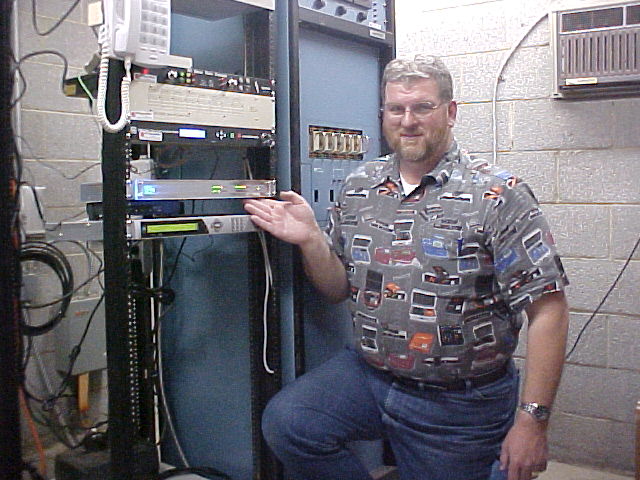
"We originally had a fractional T1 running from our studio in Alpena, Michigan to our main broadcast center in Tawas City, Michigan, over 60 miles away. The T1 crossed LATAS for Verizon and AT&T, and was becoming cost-prohibitive (over $1,000 a month). One of our Telos Zephyrs finally gave up the ghost and was toast after 5 years of operation. The Adtran TSU 600 units and the Zephyrs have now been replaced by a router and a dedicated business com IP connection from studio to studio via Charter internet services at both locations and the Comrex Access products. We don't cross LATAS anymore, and our bill has been cut by 75% just for a broadband connection.

The Comrex Access Rack performs well on the internet connection with only 368 Kbps upload and 3 Mbps download speed. The IP is static and the Comrex units are configured to be static as well, through dedicated routers on a seperate WAN from our existing in-house internet access. Andy at Comrex was wonderful with helping me set up these units, in fact he went beyond normal working hours one evening to help me set up the recieve-studio end. Because of this dedication to their product and customer service, I'd recommend this product. It's reliable and delivers as advertised.

We are using this product as a continuing service (always on) from one studio to the other, with a bi-directional connection that provides air monitor back to the originating studio location. There are a couple of caviats you should watch for, though. In our situation the HQ2 audio codec caused too much 'swishing" of the highs of the audio to suit me. With Andy's help we changed the codec to HQ1 and the highs improved drastically, but then the midrange seemed to become more sensitive to flanging effects and midrange boosts in equalization in processing and from Rock music programming content. However, with some EQ tweeks in processing, the midrange tamed down and the MP3-like artifacts became very acceptable for a remote STL-type broadcast.

The unit has operated for nearly two weeks in the HQ1 mode without a single audio drop-out or interuption in service. The HQ2 mode, at set-up, initially had more frequent drop-outs when accessing the Access Rack via the internet browser, and when not accessed at all it had drop-outs as well. Since changing to HQ1, though, the drop-outs don't occur at all! Because of the way the Packets arrive at the reciever for reassembly, this may not be related to the Comrex product directly. Every network is dynamic, and some networks behave better with larger Packets at slower bitrates. That seems to defy logic, but given that time domains in the IP environment are always shifting, I suppose anything is possible given the type of servers and routers used, among other variables.

Another thing to watch for is to make sure your audio source material is the best you can pipe into the transmit end of the Access. Any bad-quality, or marginal MP3's will have their inherent audio flaws accented by the Access Rack in any of the HQ modes (HQ1 being the best transmission mode right out of the box with no AAC plug-in, in my humble opinion). The HQ codecs operate at different bit rates than what is found in standard MP3's, so avoid bit rates below 128 or 192 on your transmit end and don't let your jocks play audio scavenged off the internet at questionable bit-rates through the Access, you'll probably notice the effect on the air if you do.

We could have opted to roll off the highs with the 12Khz codec, but we run satellite audio after business hours, so I wanted the audio to match up as closely as possible (with either HQ1 or HQ2 having a roll-off of 15Khz) to the satellite source. We are in the process of making every single automation music track 320Kbps MP3 at full bandwidth (44.1Khz), just to be sure we are piping the best audio we can into our transmitter. Everything could be WAV file, but the music plays from a server in our Smartcaster system, so MP3 or AAC is the best option to play the audio across the network. 320Kbps does this well and performs very acceptably through the Comrex Access Rack. In the future we plan on using the Comrex Access in linear mode when we get our own IP pipeline from the studio to the transmitter, then any concerns about audio quality will be moot. However, if you have the extra money, buy the AAC codec plug-in for the Access to save you some bandwidth and improve the audio quality. I also like the fact that these units can upgrade software codecs just like a computer, and they have a bullet-proof Linux core OS so these babies can sit right on the network and not get hit by all the crazy stuff out there on the web.

Overall, the Cost versus Performance ratio is excellent. I'd recommend the Comrex Access as a great replacement option to cut costs for T1 or ISDN service and still perform acceptably for FM broadcast. If using Access for an AM STL, I would think the performance would be just as good as any standard STL. Although not designed explicitly to be an STL, right now the Comrex Access performs well as one, and I may add reliably to this point in this engineer's experience. We are now going to commit to full purchase from BSW and retire our antique fractional T1. By the time we take the additional phone circuits off our T1 as well as the T1 itself, our savings will be about $1,100 a month even after paying for the dedicated network connection through Charter internet! Thanks Comrex, for an alternative, affordable solution that finally gives the phone company a run for its money! Competition is a good thing!

Marvin Walther
Chief Engineer
WIOS-AM, WKJC-FM, WQLB-FM, WKJZ-FM
Tawas City, MI
Alpena, MI
wkjc@wkjc.com

Tuesday, August 08, 2006

The Ticket - Dallas

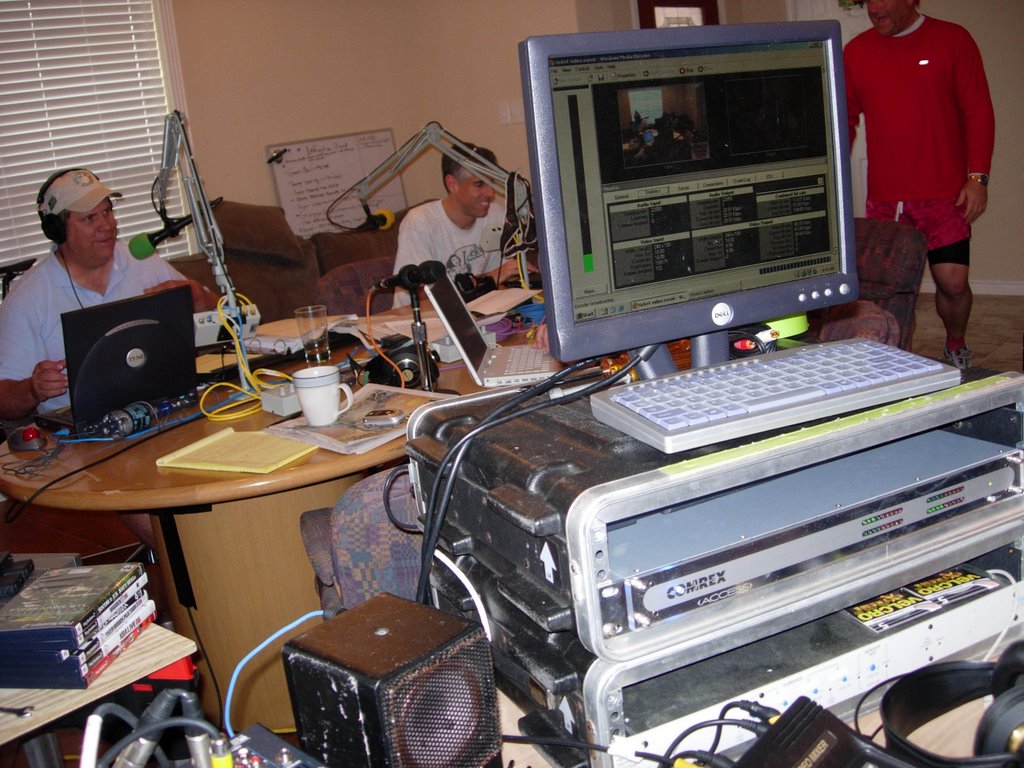
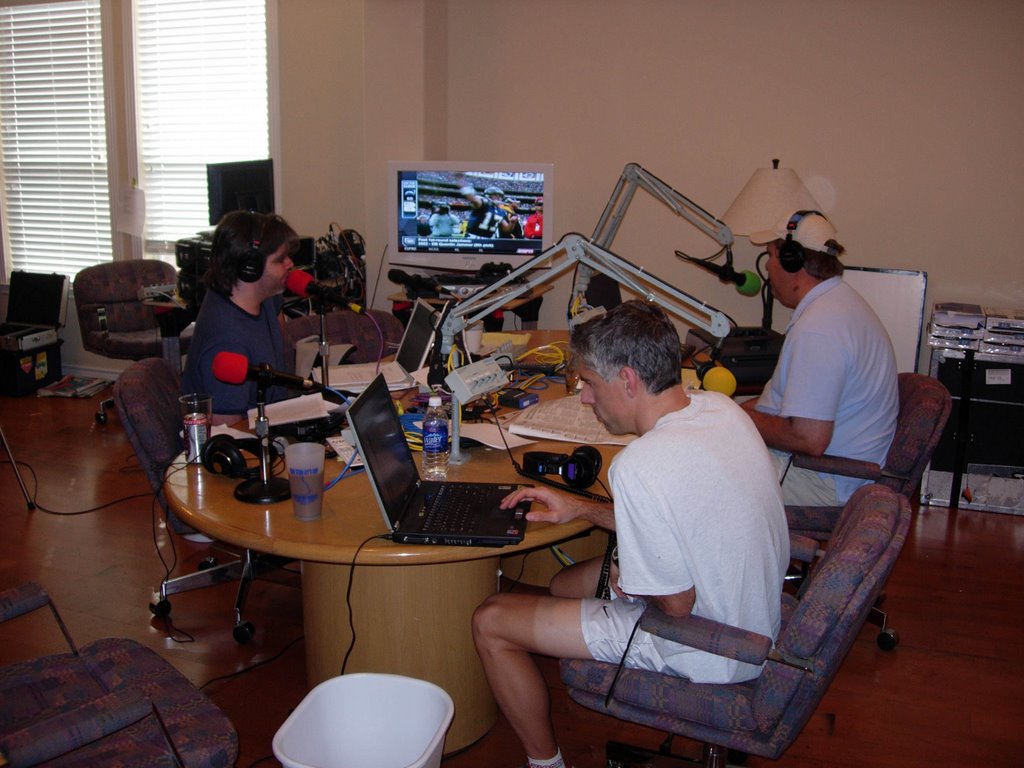
Back in April, Cumulus Radio Dallas sports talk giant The Ticket jumped on the reality bandwagon and launched probably the first reality radio show in history. They were given a brand new home in a new development by a national home builder in a northern suburb of Dallas to use for one week. The entire airstaff and a few brave engineers all moved into the Ticket Compound to live and work together for the whole week. As you can imagine, “Big Brother”-style mayhem ensued. Jocks would randomly crash one another’s shows, fight over the remote control and steal each other’s food from the fridge. Well, that was the fun and relatively easy part.

When the engineering team started to investigate the technical aspects of the remote, they were dismayed to discover that this new development was totally devoid of copper. As such, there was no possibility of getting ISDN pulled to the home. This fiber only area was being serviced by Verizon’s new FiOS…their fiber optic internet service which offers blazing data speeds of 3MB up and down.

This remote easily became the most talked about in Dallas and listeners are still buzzing about the event today. But faced with seemingly insurmountable technical challenges, Dallas Engineering Manager Rob Chickering turned to the Comrex Access to provide 24/7 audio coverage of the event.

“Basically we were using the codec in BRIC-HQ2 15 kHz stereo mode but using one return channel from the station to feed the web video encoder with the other providing IFB,” says Chickering. “We fed 15 kHz mono back to the station for on-air. I can honestly say, ‘This box rocks!!!’ We had a Marti as a back up but never used it. It was great to be able to use the Access web interface to monitor the connection statistics during the entire remote and there was plenty of data overhead throughout the week long broadcast. We only had one minor interruption during the whole week and that was due to a router issue on the station side. The audio quality of the codec was superb. Programming was ecstatic even though they were initially concerned about staying connected over an IP connection for the entire week. We had the highest book the radio station has ever had. With a 13.8 share, Men 25-54 AQH and a 19:25 TSL during the week of this remote, I’d say that The Ticket Compound was truly a great test for this product.

After the first day we had absolutely no worries about the viability of Access for this very high profile, week-long remote. Management was pumped and incredibly happy that we pulled this whole thing off!”

Tuesday, June 20, 2006

You Gotta Do What You Gotta Do

Comrex did not design the ACCESS to replace existing STL technology. While it was thought that the ACCESS would be exceedingly popular for STL back-up, we really never intended it to be used on the public internet as a primary Studio to Transmitter Link. Especially wirelessly.

So imagine our concern... No... Our DISMAY when we learned that of the first run of ACCESS, several pair had been purchased for exactly that usage. When we spoke with the customers and said that we really didn't think the public internet was the appropriate transmission path for an STL!!! THE LIFE BLOOD OF A RADIO STATION!!!!! We were told by one customer, "OK. The choice my station has is to use the ACCESS on DSL or to go dark. Do you think my station should go dark?"

So what choice did we have. We went back into the "ivory tower of coding miracles" and developed version 1.1, an even more robust version of code. We STILL do not encourage use of the public internet for STL. But in the interest of understanding that you gotta do what you gotta do, we will tell the story of one station who was out of options.

Stevan White is a contract engineer based in Amarillo, TX and KDJW 1360 AM (also in Amarillo) is one of his clients. He was given the task of getting KDJW's STL reliably functioning on the ACCESS over wireless internet. Stevan was not displeased with the initial performance with code revision 1.0, but talking with him sparked some ideas in the ACCESS engineering team and so Stevan was the first beta tester of version 1.1.

This is what Stevan had to say about this.

"As good as the ACCESS worked right out of the box we were having some issues with our ISP that made our "STL" a little less than desirable with occasional dropouts, hiccups and Darth Vader, Jr. sounding coding delay.

(They later found and fixed a router problem which made a huge difference in the quality of our connection.) As soon as it was available, (Comrex) sent us the software upgrade via email. We waited a while to do it so we could be sure to have things set up and in place to make the process as smooth as possible. Since we use the Access to send our network audio feed to the studio (satellite dish and receiver are at the transmitter site due to lack of space at the downtown studio) I got set up and ready to go but waited until after the local ID and patched the satellite audio feed directly to the audio processor. The only interruptions we would have during the whole process would be the few seconds to move the XLR connector before and after the process.

My A+ certified computer whiz son John, who works with me on a lot of studio and transmitter projects, had the software ready to go on the computer at our home office. After we were "in the clear" he disconnected both Access codecs and began the update process. We reset everything to factory default as the instructions suggested.

After reconnecting and rechecking all of our settings, I put the Access back on the air. The whole process, including our double checking and rechecking of everything we could think of, took 55 minutes total. Except for a few seconds of silence while making the switch, we couldn't hear any difference in the quality of the audio! The audio still sounded just as good making the trip to the studio and back as it did direct.

This same client is talking about a low power FM project in a small community almost 200 miles away. They want to broadcast the same program material from that location. (I started thinking about using the Access for point to multipoint distribution.) They also wanted to know if they could do all this without a studio there. My reply?
No problem."


If you are an ACCESS user and your codec does not have version 1.1, it may be worth upgrading as it could enhance performance. Or you could wait and upgrade to version 2.0 in mid July. As with most Comrex upgrades, there is no cost to upgrade, so it is worth checking the upgrade page on the Comrex website regularly.

Tuesday, June 13, 2006

"Happiest Balloon on Earth Tour" with Disney

Ok. This one isn't an ACCESS remote. They used a Matrix on GSM. But I was so charmed by the resourcefulness of Mike Ames, who engineered the remotes.

Consider the challenge. Mike was charged with delivering two weeks of remotes from 11 different cities. From a HOT AIR BALLOON!!!! Yup. You heard me right. He needed to use the Matrix on GSM while the talent was floating around in a balloon. One of the biggest difficulties was getting the talent to be completely self-sufficient. The talent needed to be able to bound into the balloon with all necessary equipment during the brief moment that the balloon was on the ground.

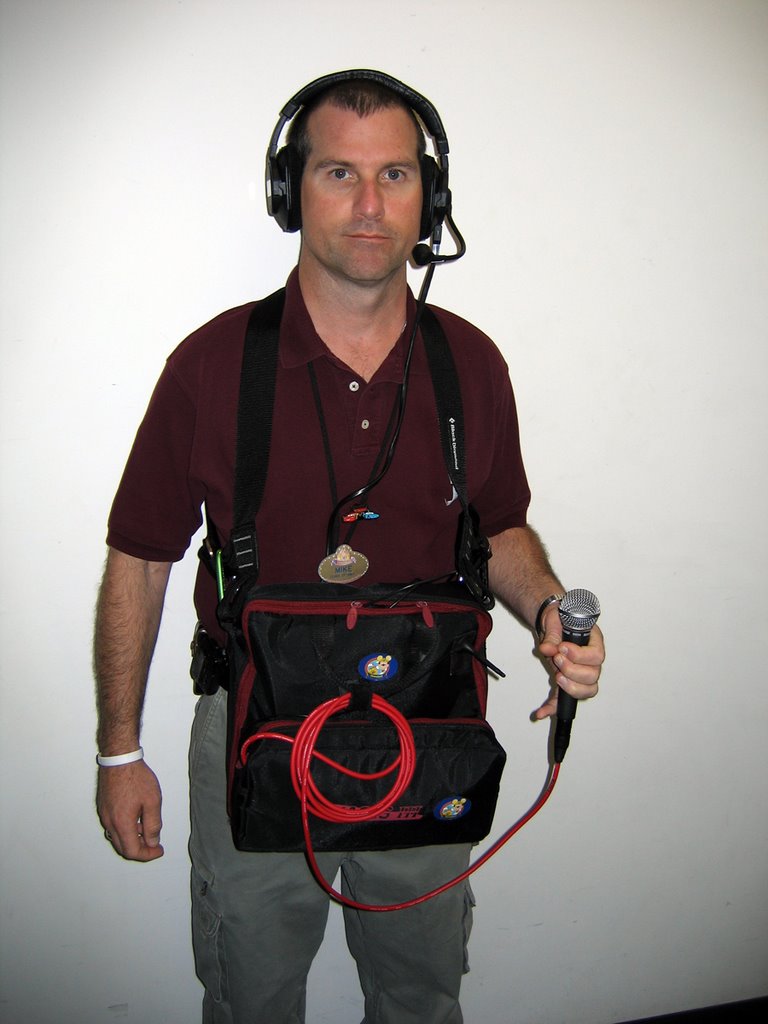
Creative engineering was necessary. Mike designed a way to modify a gear bag in order to be able to make a Matrix wearable including battery, GSM module, and antenna (as well as mics, etc). He did a heck of a job. Don't you think?

From Mike:

"You can tell my story. It was the "Happiest Balloon on Earth Tour" with Disney (celebrating the 50th anniversary of the park). The cities we went to were Tucson, AZ - Phoenix, AZ - San Diego, CA - Fresno, CA - San Francisco, CA - Sacramento, CA - Vancouver, BC - Seattle, WA - Portland, OR - Salt Lake City, UT - & Albuquerque, NM. We did mostly am remotes, starting at 05:00 am, except for Vancouver, BC which was a pm flight. Three or four of the cities we had 2 stations broadcasting at the same time, with only one station at a time actually flying in the balloon. When a station did fly in the balloon, they were generally in the air for around 45 minutes. Whether they flew in the balloon or were just tethered, the broadcasts were around 3 hours, from set up to strike of the balloon.

We were lucky enough to have the best pilots in the business, in Scott and Laurie Spencer who have flown for some 30 plus years, we also picked up crew members for the balloon set up and strike in each city. Besides engineering the remotes in the morning, I had to actually assist with the crewing in the pm, which made for a very long day. But it was truly a great experience, and I learned a lot about being in the middle of no where trying to do a Live Broadcast, what a great challenge."

Mike used T-Mobile and was successful in all locations with no exceptions. This is surprising and delightful to us at Comrex, as we have been hearing more and more horror stories about GSM carriers dropping support for CSD. We are theorizing that perhaps being Disney doesn't hurt?